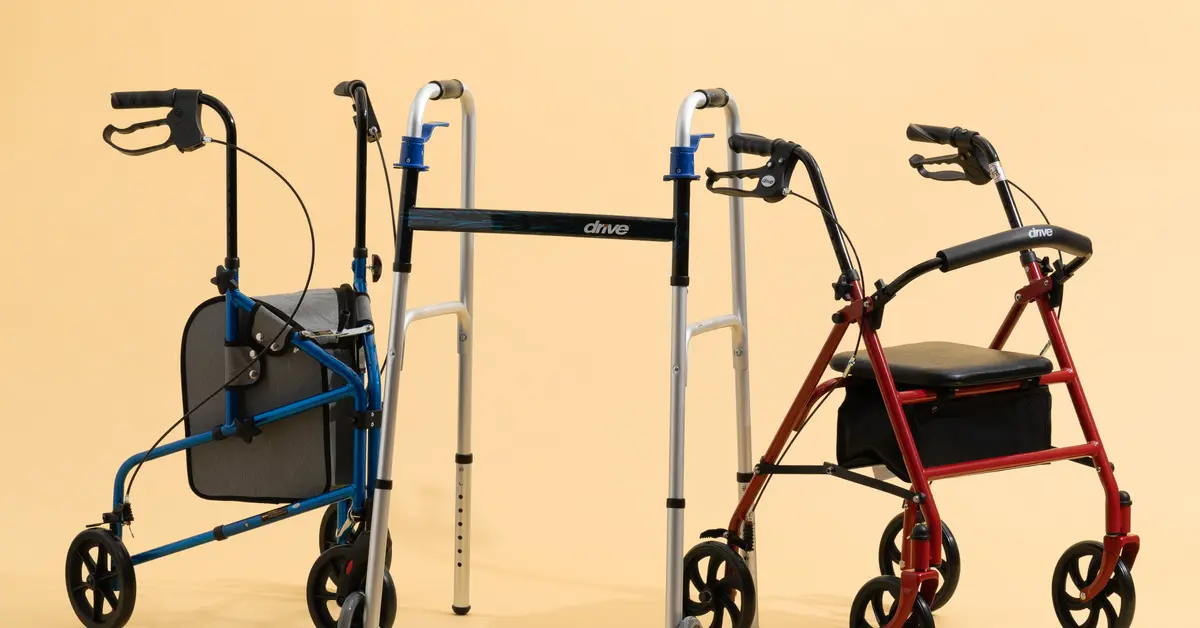
When it comes to mobility aids for use in and around the home, there are various types of walkers designed to cater to different needs and situations. While we often associate walkers with seniors and older individuals, these devices come in a wide array of designs, each intended for specific purposes. To make an informed decision about the right walker for your home, it’s essential to understand the various options available.
- Standard Walker
The standard walker is the most basic type, consisting of four legs with rubber tips at the ends. It typically features handrails at the top with either soft or hard rubber foam grips. This type is ideal for seniors who spend most of their time indoors and may already have balance issues, making it an improvement over a basic cane.
Benefits:
- Provides stability.
- Lightweight.
- Foldable models available for easy storage and transport.
Drawbacks:
- Requires the user to lift the walker with every step.
- Offers limited mobility.
- Two-Wheel Walker (Rolling Walker)
Also known as a rolling walker, this type features two wheels at the front and two rubber-tipped legs at the back. It’s suitable for individuals with an unstable gait who don’t suffer from severe balance problems. Users can maintain a more natural walking pattern as they don’t need to lift the walker with each step.
Benefits:
- Allows for a more normal gait pattern.
- Easy to maneuver.
- Foldable and lightweight.
Drawbacks:
- Less stable than a basic walker.
- Requires more coordination and mental awareness.
- Front wheels don’t rotate, requiring more space to turn.
- Rollator Walker
Rollator walkers come in three or four-wheeled versions, with the three-wheeled models resembling tricycles. All wheels can fully rotate, making them easy to maneuver. They include a seat, an under-seat storage pouch, and a handbrake for added safety, making them convenient for outdoor use and frequent stops or rests. Some rollators are designed for standing support and outdoor use, with adjustable height options for added comfort. Note that the weight capacity of the seat depends on the material of the rollator.
Benefits:
- Easy movement.
- Improved mobility.
- Seat and storage pouch for better functionality.
- Suitable for outdoor activities.
Drawbacks:
- Difficult to control.
- Brake is meant to slow down movement, not stop it.
- Not for individuals with unstable gait.
- Knee Walker (Knee Scooter)
A knee walker or knee scooter is a unique mobility device designed for individuals with mobility issues below the knee due to injuries such as fractures, leg injuries, or diabetic wounds. It features an elevated platform for resting the injured limb and allows movement by using the good leg to push the device. This provides better balance compared to forearm crutches.
Cane
While not considered a walker, a cane is still a valuable mobility aid, especially for those needing minimal assistance. Canes come in various designs, primarily differing in handgrip styles.
Choosing the Right Walker for Your Home
When selecting a walker for home use, consider these key points to ensure the user’s convenience and safety:
- Adjustable: Ensure the walker has adjustable handle height to match the user’s size, preventing posture problems.
- Stability: Consider the user’s gait and balance issues when choosing between rollators and standard walkers.
- Weight Capacity: Ensure the walker can support the user’s weight.
- Lifestyle: Choose foldable walkers for active individuals who spend time outdoors.
- Handgrips: Opt for walkers with comfortable, non-slip handgrips.
In conclusion, selecting the right walker for home use is essential for maintaining independence and safety. Whether you opt for a standard walker, a rollator, or another type, these mobility aids offer valuable support for individuals of all ages, ensuring they can move freely and comfortably in their homes.