The first properly hot day of a Melbourne summer does the same thing every year. Phones start ringing at every heating and cooling business in the city, and a calendar that looked half-empty in October is gone by the weekend. Anyone who waits until then to book an evaporative cooling installation Melbourne tradies can fit in before Christmas is competing with everyone else who waited too, and the job gets slotted in wherever there’s a gap.
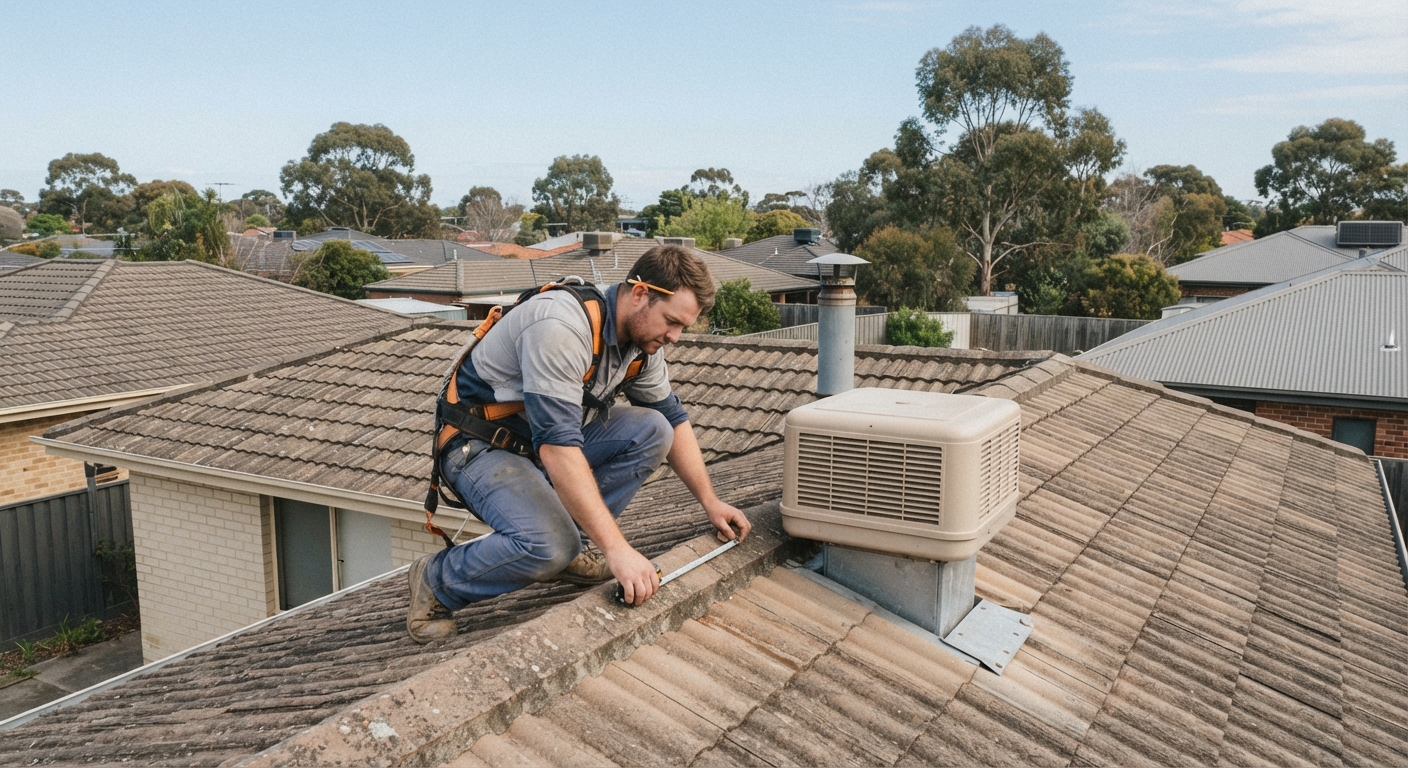
Early November is a much better spot to be in. It’s warm enough to be thinking about cooling, but nobody’s dragged a mattress into the lounge room yet. A site visit booked now gets proper time on the roof, and the quote that comes back reflects your actual house rather than a rushed estimate. That matters more than people expect with evaporative cooling installation. Melbourne homes vary enormously, from post-war weatherboards in Heidelberg West to two-storey builds in Templestowe, and most of the decisions that shape how the system performs get made up on the roof.
The Roof Decides More Than the Brochure Does
An evaporative cooler pulls outside air through wet pads and pushes it into the house, so whatever air sits around the unit is what ends up in your bedrooms. Mount it close to a gas heater flue or a bathroom exhaust outlet and you’ll find out on the first warm evening. That’s why a careful installer spends real time on placement, rather than picking a spot from the driveway.
The unit also needs a mains water connection and a drain line for the water it bleeds off, along with a safe electrical supply to the roof. None of that is complicated work. It just has to be planned before anyone carries a unit up a ladder, and a proper site visit should cover:
- The unit’s position relative to flues, exhaust fans and anything else venting onto the roof
- Roof pitch, tile type and access (two-storey homes need more safety setup, which affects timing)
- Where the water connection comes from and where the drain line will run
- Existing ductwork, if an old cooler is being replaced
- Power to the roof space
- Which rooms genuinely need an outlet, and which ones don’t
Evaporative Cooling Installation in Melbourne Homes Comes Down to the Outlets
Outlet placement shapes how the system feels day to day far more than the unit on the roof does. One big outlet in the hallway cools the hallway beautifully. The bedroom at the far end of a long house gets whatever’s left over.
Evaporative systems also need somewhere for air to escape, so the rooms you’re cooling need a window or door open while it runs. An outlet in a room where nobody can comfortably leave a window open won’t do much, and that’s worth thinking through before the ceiling gets cut.
Replacing an old cooler adds another layer. In plenty of Melbourne homes the ductwork has been sitting in the roof cavity for decades, and flexible duct can sag or work loose from a fitting without anyone noticing from below. Reusing it is often perfectly fine, but it’s worth having it checked first, because the alternative can be a brand-new unit blowing cool air into a disconnected duct above the garage.
Sizing Before Brand
The brand question usually comes up first, and it’s the less important of the two. Most of the well-known names make reliable units. What decides whether you’re comfortable in January is matching the unit’s capacity to your floor area, your ceiling heights and how the house holds heat through a run of hot days.
Evaporative cooling is at its best on Evaporative Cooling Installation Melbourne’s dry northerly days, which is most of our serious heat. On a sticky, humid afternoon it works harder for less result. Any installer who skips that conversation isn’t doing you any favours. Knowing it upfront helps you decide where the outlets go and how much capacity you actually need.
December Fills Faster Than People Think
Most installers in Evaporative Cooling Installation Evaporative Cooling Installation Melbourne find their December calendar fills well before the weather really turns. Booking a site visit in November gives everyone time to get the roof position, the outlets and the sizing right, instead of fitting the job into whatever gap is left once the first heatwave arrives.